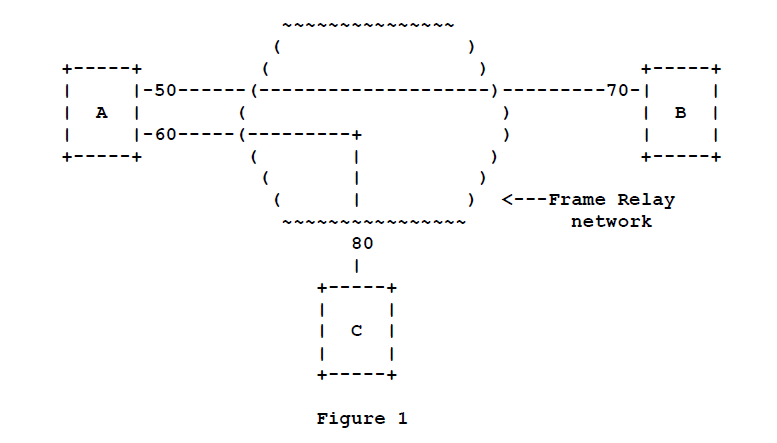
InARP over Frame Relay Network

Inverse Address Resolution Protocol (InARP)

Posted on | | Leave a Comment on Inverse Address Resolution Protocol (InARP)

Inverse Address Resolution Protocol Introduction This document will rely heavily on Frame Relay as an example of how the Inverse Address Resolution Protocol (InARP) can be useful. It is not, however, intended that InARP be used exclusively with Frame Relay.  InARP may be used in any network that provides destination hardware addresses without indicating corresponding […]
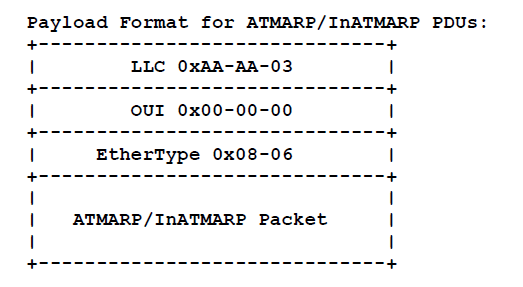
Payload format for ATM ARP or InATMARP

Classical IP and ARP over ATM

Posted on | | Leave a Comment on Classical IP and ARP over ATM

Classical IP and ARP over ATM  2.  INTRODUCTION The goal of this specification is to allow compatible and interoperable implementations for transmitting IP datagrams and ATM Address Resolution Protocol (ATMARP) requests and replies over ATM Adaptation Layer 5 (AAL5)[2,6]. This memo specifies the stable foundation baseline operational model which will always be available in IP and ARP over […]

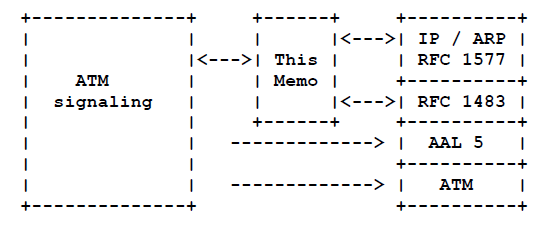
Relationship of IP, RFC 1483, ATM signaling, ATM and AAL5

ATM Signaling Support for IP over ATM

Posted on | | Leave a Comment on ATM Signaling Support for IP over ATM

  ATM Signaling Support for IP over ATM 1.  Abstract This memo describes the ATM call control signaling exchanges needed to support Classical IP over ATM implementations as described in RFC 1577 [LAUB94]. ATM endpoints will incorporate ATM signaling services as specified in the ATM Forum User-Network Interface (UNI) Specification Version 3.1 [ATMF94]. IP over […]

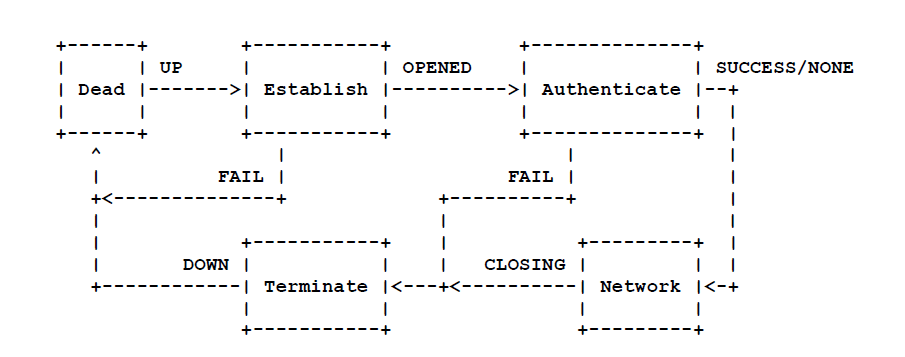
ppp phase diagram

Point-to-Point Protocol (PPP)

Posted on | | Leave a Comment on Point-to-Point Protocol (PPP)

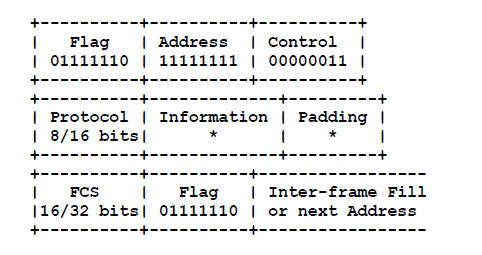
  The Point-to-Point Protocol (PPP) The Point-to-Point Protocol (PPP) provides a standard method for transporting multi-protocol datagram over point-to-point links.  PPP is comprised of three main components: 1.    A method for encapsulating multi-protocol datagrams. 2.    A Link Control Protocol (LCP) for establishing, configuring, and testing the data-link connection. 3.    A family of Network Control Protocols […]